When people ask us about the top solar in Bihar, they usually mean one question: what are other families, farmers and shop owners actually installing, and would it work for me? These are the six solar solutions we are asked for most across the state, with who each one suits, a typical size and whether a subsidy applies.
Key points
- Rooftop on-grid solar for homes is the most popular choice, because of the PM Surya Ghar subsidy.
- Hybrid systems with lithium batteries are growing in areas with long power cuts.
- Farmers are replacing diesel pumps with solar pumps, with support under PM Kusum Yojana.
- Shops, schools and hospitals use rooftop solar to cut daytime bills, which is when they use the most power.
1. Rooftop solar for homes (on-grid)
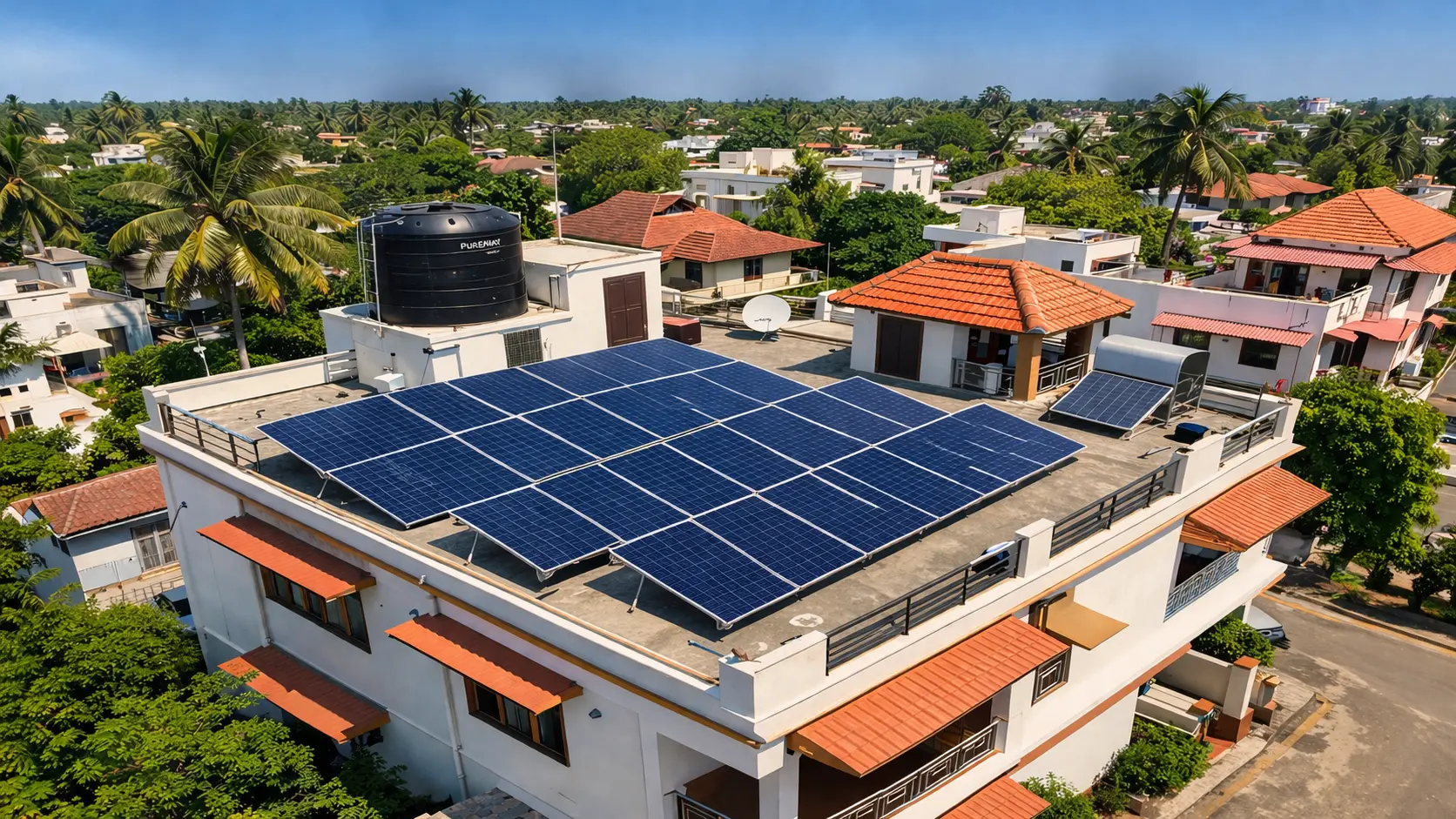
This is the most common system in Bihar today. A 2 to 3 kW on-grid system sits on the roof, powers the house during the day and sends extra units to the grid through a net meter. It is the type covered by PM Surya Ghar Muft Bijli Yojana Bihar, which pays up to ₹78,000 for 3 kW.
- Suits: homes with steady supply and a bill of ₹1,500 or more
- Typical size: 2 to 3 kW
- Subsidy: yes
- Read more: residential rooftop solar
2. Hybrid solar with battery backup
Where cuts last for hours, families pair rooftop panels with a hybrid inverter and a battery. During the day the panels run the house and charge the battery; at night or during a cut, the battery keeps fans, lights and the fridge going.
- Suits: homes, clinics and shops with frequent power cuts
- Typical size: 3 kW with a 5 kWh lithium battery
- Subsidy: the battery is not covered
- Read more: inverter and battery systems
3. Solar pumps for farms
Diesel is expensive and grid supply in fields is uncertain. A solar pump starts when the sun is up and gives the most water at midday, which is when crops need it. Running cost is close to zero.
- Suits: farmers with a borewell, pond or canal
- Typical size: 3 to 7.5 HP depending on depth and acreage
- Support: PM Kusum Yojana for eligible farmers
- Read more: solar irrigation pumps
4. Rooftop solar for shops, schools and hospitals
Businesses pay higher tariffs and use most of their power in the day, so solar pays back fast. Schools, clinics, hotels, cold stores and showrooms are the most common customers.
- Suits: any business with a daytime load and a usable roof
- Typical size: 10 to 100 kW
- Subsidy: the home scheme does not apply; savings come from lower bills
- Read more: commercial solar
5. Solar street lights
Panchayats, schools and housing societies use solar street lights where laying cables is costly. Each light has its own panel and battery and switches on by itself at dusk.
- Suits: village roads, campuses, farm boundaries
- Typical size: all-in-one or split lights, 20 to 60 W LED
- Read more: solar street lights
6. Lithium batteries for existing inverters
Many homes already have an inverter with an old lead-acid battery. Switching to a lithium battery, and later adding panels, is a simple first step into solar.
- Suits: homes that want better backup now and solar later
- Read more: lithium solar batteries
Which one should you start with?
If you own a house with a usable roof and steady supply, start with on-grid rooftop solar and claim the subsidy. If power cuts are your main problem, go hybrid. If you farm, look at a solar pump first. Our guide to the best solar in Bihar for your home goes deeper into choosing the system, and solar in Bihar: cost and savings covers the numbers.
Frequently asked questions
Rooftop on-grid solar for homes, mainly 2 to 3 kW systems, because they qualify for the PM Surya Ghar Muft Bijli Yojana Bihar subsidy.
Yes. Solar pumps replace diesel and have very low running costs. Eligible farmers can get support under PM Kusum Yojana.
No. That scheme is for residential homes. Businesses still save a lot because they use most of their power during the day.
About 100 square feet of shade-free roof for every 1 kW.
Yes, if you choose a hybrid-ready inverter at the start. Ask your installer before you buy.
Tell us what you want to power
Home, farm or business, our team will suggest the right solar option and give you a written quote after a free site visit.