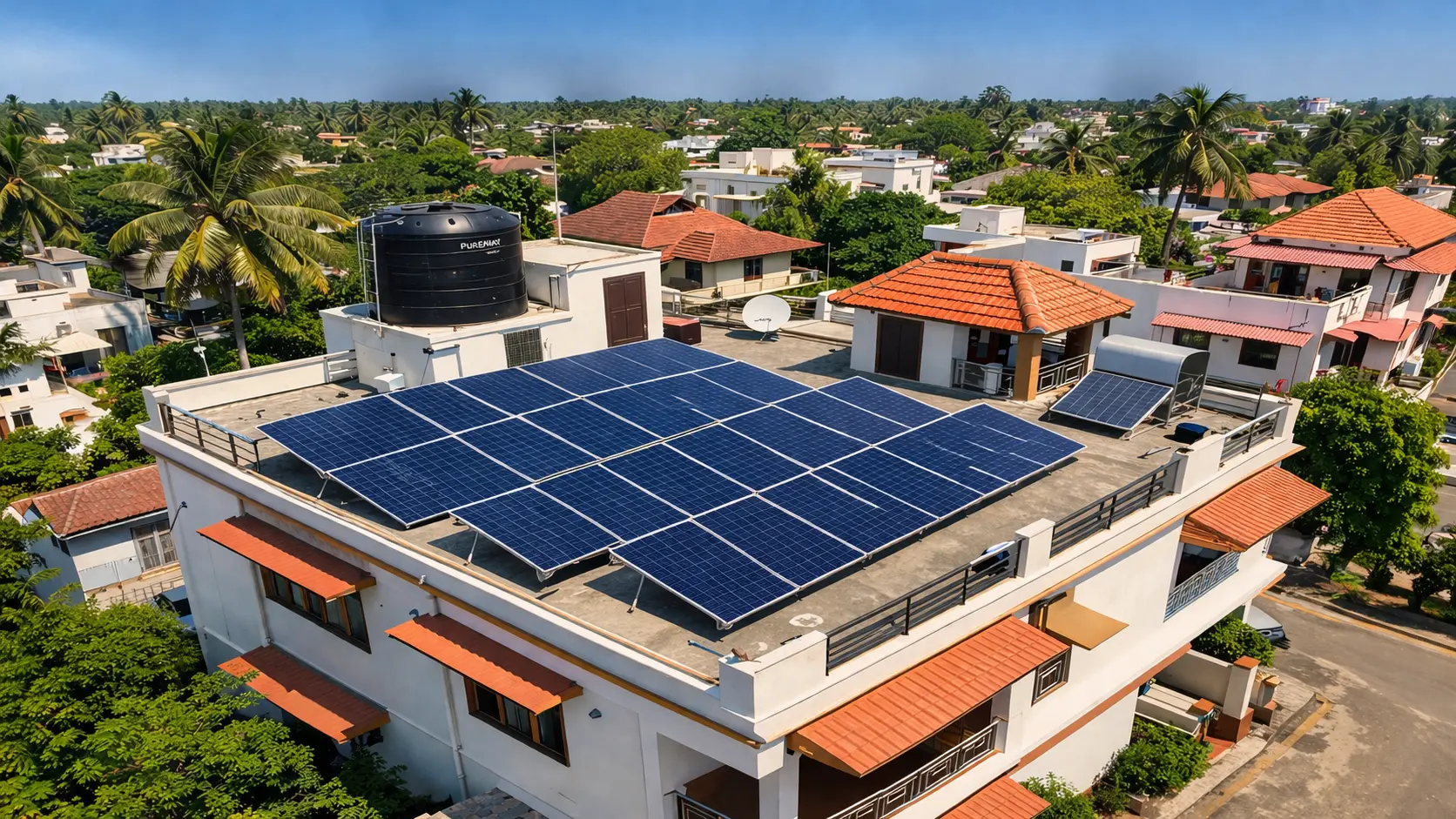
Before anyone decides on solar in Bihar, they want three numbers: what it will cost, how much the government gives back and how many years until it pays for itself. This guide gives you those numbers using the same figures our team uses on site visits, with a worked example for a typical home. Where the answer depends on your roof or your bill, we say so.
Key points
- Expect roughly ₹60,000 per kW before subsidy for a home on-grid system, so about ₹1.8 lakh for 3 kW.
- PM Surya Ghar Muft Bijli Yojana Bihar pays ₹78,000 for 3 kW, and a Bihar top-up of up to ₹20,000 has been reported.
- A 3 kW system makes about 360 units a month; at ₹8 a unit that is roughly ₹2,880 off your bill every month.
- Most homes using 250 units or more recover the cost in about three years.
How much does solar cost in Bihar?
For a home on-grid rooftop system with made-in-India panels, a good working figure in 2026 is around ₹60,000 per kW before subsidy. That covers panels, inverter, structure, wiring, earthing, the net-meter process and installation. Prices go up with premium brands, raised structures or long cable runs, and down a little for larger systems.
| System | Units per month | Cost before subsidy | Central subsidy |
|---|---|---|---|
| 1 kW | about 120 | about ₹60,000 | ₹30,000 |
| 2 kW | about 240 | about ₹1,20,000 | ₹60,000 |
| 3 kW | about 360 | about ₹1,80,000 | ₹78,000 |
| 5 kW | about 600 | about ₹3,00,000 | ₹78,000 |
These are estimates to help you plan. A written quote after a site visit is the real number. The solar calculator lets you try different sizes.
Subsidy for solar in Bihar
The main support is PM Surya Ghar Muft Bijli Yojana Bihar. The central subsidy is fixed by size. Bihar has also announced an extra top-up for home rooftop solar; confirm the current status when you apply.
| System size | Central subsidy | Bihar top-up (reported) | Total up to |
|---|---|---|---|
| 1 kW | ₹30,000 | ₹10,000 | ₹40,000 |
| 2 kW | ₹60,000 | ₹20,000 | ₹80,000 |
| 3 kW and above | ₹78,000 | ₹20,000 | ₹98,000 |
The subsidy reaches your bank account after the system is installed, net-metered and inspected. Our step-by-step guide explains how to apply for PM Surya Ghar in Bihar.
Worked example: a 3 kW system for a Bihar home
Take a family in Vaishali using about 350 units a month, with an AC in summer. This is how the numbers usually look:
| Item | Estimate |
|---|---|
| 3 kW system at about ₹60,000 per kW | ₹1,80,000 |
| Central subsidy | − ₹78,000 |
| Bihar top-up, if available | − ₹20,000 |
| Family's own cost | ₹82,000 to ₹1,02,000 |
| Solar units per month | about 360 |
| Saving at ₹8 per unit | about ₹2,880 a month, ₹34,000 a year |
| Payback | about 2.5 to 3 years |
After payback, the panels keep producing for 20 years or more. Over that time the saving is many times the cost. Your result will differ if you use fewer units, if your tariff slab is lower or if shade cuts generation.
Does solar still pay with Bihar's 125 free units?
Since August 2025 Bihar gives domestic consumers 125 free units a month. That changes the maths for small users, and it is worth being honest about it.
- Under 125 units a month: your bill is already low. Solar saves little; it may not be worth it unless your use is rising.
- 150 to 250 units: a 1 to 2 kW system makes sense, especially with the subsidy.
- 250 units and above, or summer AC use: 3 kW is usually the best value and pays back fastest.
How big should your system be?
Take your average monthly units from the last 12 bills and divide by 120. That gives the kW you need. Then check the roof: you need about 100 square feet of shade-free space per kW. Water tanks, stair rooms and tall neighbours can reduce usable space, so a site visit is important.
Not sure whether to go on-grid or add a battery? Our guide on the best solar in Bihar for your home covers that choice.
How net metering lowers your bill
With an on-grid system, your home uses solar power first during the day. When the panels make more than you use, the extra goes to the grid through a bidirectional net meter. At night you draw from the grid. At the end of the billing cycle, you pay only for the difference between what you took and what you gave. Fixed charges on the bill still apply.
Running costs after installation
Running costs are low. Panels need cleaning every few weeks in the dry, dusty months, which you can do with water and a soft brush. Plan for an electrical check once or twice a year. The inverter is the part that may need service once in the system's life. Our maintenance service covers all of this if you prefer not to do it yourself.
Next step
If the numbers above look right for your home, the next step is a site visit and a written quote. ASAWAR KRISHI ENERGY is a solar company in Bihar that does the survey for free and handles the subsidy paperwork. If you want to compare installers first, see the top 10 solar companies in Bihar.
Frequently asked questions
About ₹1.8 lakh before subsidy at roughly ₹60,000 per kW. After the ₹78,000 central subsidy, and a Bihar top-up if available, the family's own cost is about ₹82,000 to ₹1.02 lakh.
Under PM Surya Ghar Muft Bijli Yojana Bihar, the central subsidy is ₹30,000 for 1 kW, ₹60,000 for 2 kW and ₹78,000 for 3 kW and above. A state top-up of up to ₹20,000 has been reported.
About 120 units a month on average over the year, more in summer and less in foggy winter weeks.
For a home using 250 units or more, usually around three years. It takes longer if your usage is low.
If you use more than about 200 units a month, yes. If your use stays under 125 units, the saving is small.
Yes. Concessional bank loans are available under the PM Surya Ghar scheme. Ask your bank or installer for the current rate.
Get your exact numbers
Share your last electricity bill and we will tell you the right system size, the subsidy you qualify for and your expected saving, free.