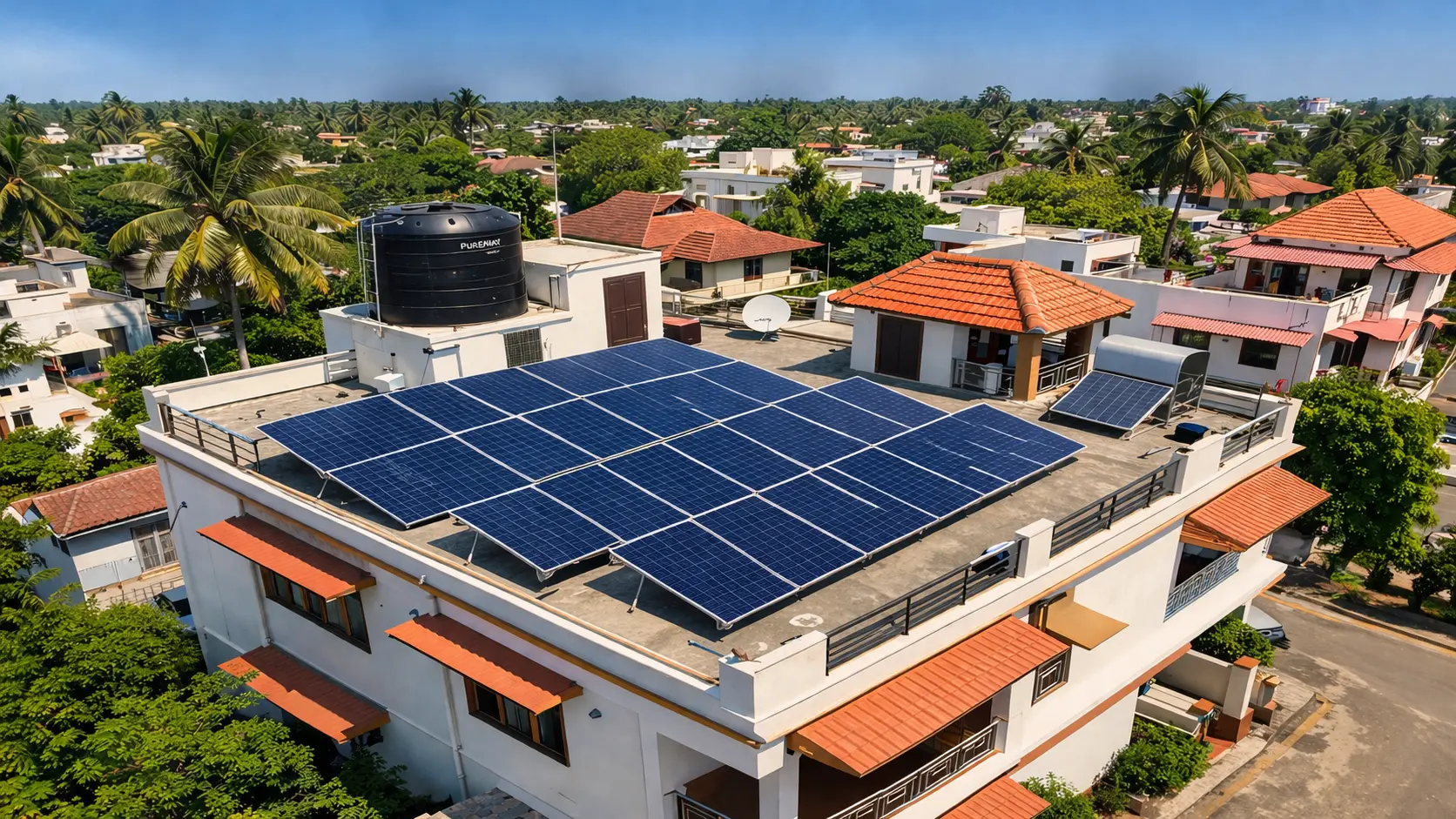
The best solar in Bihar is not one brand. It is the system that matches your roof, your electricity bill and how often your power goes off. In this guide we explain, in plain language, how to choose between on-grid and hybrid solar, which panels and inverters hold up in Bihar's heat and dust, and when a battery is worth paying for.
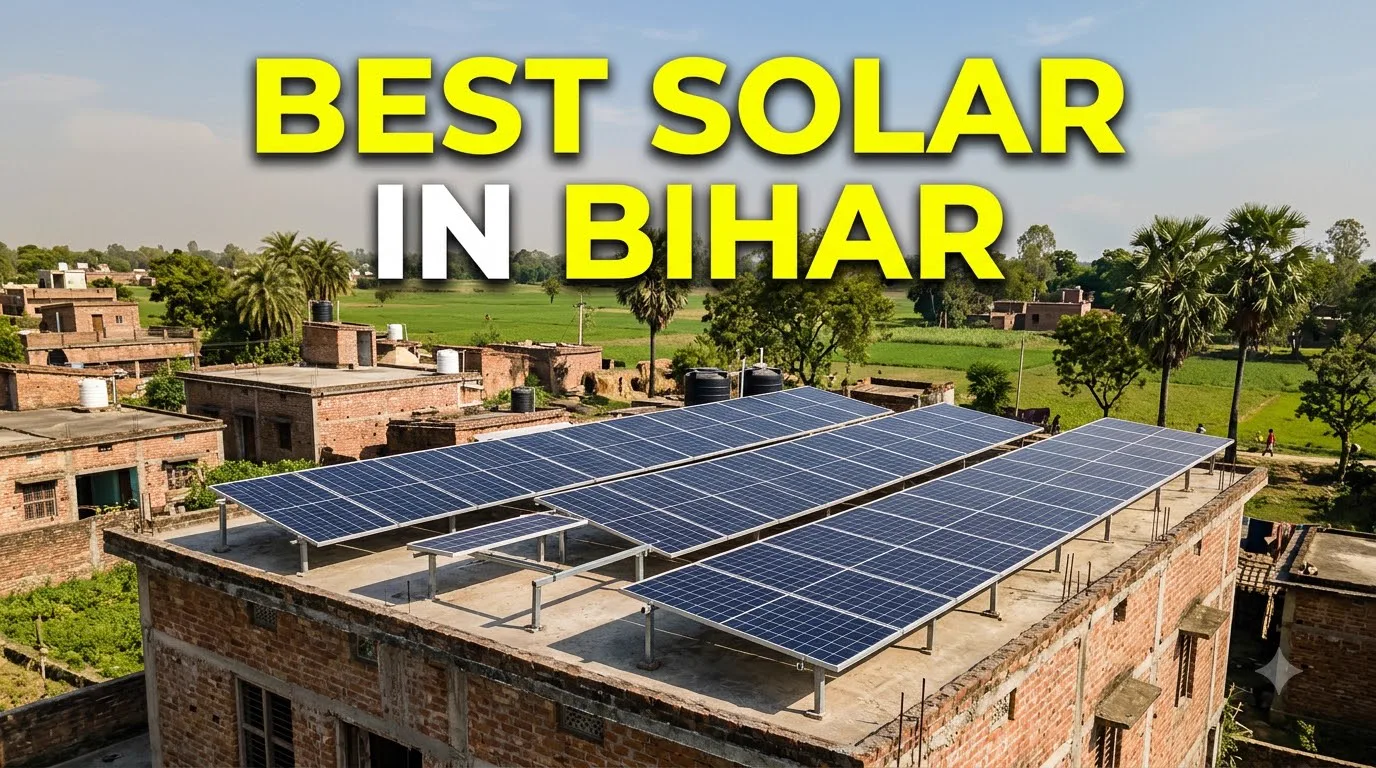
Key points
- For most homes with steady grid supply, an on-grid system is the best value and the only type that gets the full PM Surya Ghar subsidy on panels.
- If power cuts are long or frequent, a hybrid system with a lithium battery is the better choice, but the battery is not subsidised.
- Choose made-in-India (DCR) panels if you want the subsidy, and an inverter brand with a service centre in Bihar.
- Size the system from 12 months of bills: roughly 1 kW for every 120 units you use in a month.
What "best" means for solar in Bihar
Bihar has three things that decide what works on a roof: long, hot summers, a lot of dust from roads and fields, and heavy monsoon rain with lightning. Add regular power cuts in many areas, and the best system is the one that keeps producing through all of that and is easy to service.
That's why we judge a system on four points: how much power it makes per rupee, how it handles heat and dust, whether it gives backup when the grid fails, and whether someone nearby can repair it.
On-grid, hybrid or off-grid: which is best?
| Type | How it works | Best for | Subsidy |
|---|---|---|---|
| On-grid | Runs with the grid. Extra power goes to the grid through a net meter. No battery. | Homes with fairly steady supply that want the lowest bill | Yes, full PM Surya Ghar subsidy |
| Hybrid | Works with the grid and charges a battery for power cuts. | Homes, clinics and shops with frequent cuts | Panels can qualify; battery is not subsidised |
| Off-grid | Works only on panels and batteries, no grid. | Farmhouses and places with no connection | Not under the home scheme |
Our honest advice: if your power is off for less than an hour or two a day, go on-grid and keep your money. If cuts last for hours, a hybrid system is worth it. You can read more on our inverter and battery page.
Which solar panels are best in Bihar?
Almost all panels sold today are monocrystalline. The newer types you will hear about are PERC, TOPCon and bifacial panels. TOPCon panels lose a little less output in high heat, which helps in a Bihar May or June, while bifacial panels make extra power from light reflected off a white or open roof.
For the subsidy, the scheme requires DCR panels, meaning panels made with Indian cells. Ask the installer to write the brand, model and wattage on the quote, and check the performance warranty, which is usually 25 years or more for good brands.
Inverter and battery: where people overspend
The inverter is the part most likely to need service in a system's life, so pick a brand that has a service centre or engineer in Bihar. A cheaper inverter with no local support costs more the first time it fails.
For batteries, lithium (LiFePO4) batteries last several times longer than lead-acid and need no water top-ups. They cost more at the start, so size them for the few appliances you really need during a cut, such as fans, lights, a fridge and Wi-Fi, not the whole house.
What size is best for your bill?
In Bihar, 1 kW of solar produces about 120 units a month on average across the year. So look at your last 12 bills, take the average monthly units and divide by 120.
| Your average monthly units | Suggested size | Roof area needed |
|---|---|---|
| Up to 150 | 1 to 1.5 kW | 100 to 150 sq ft |
| 150 to 300 | 2 to 2.5 kW | 200 to 250 sq ft |
| 300 to 400 | 3 kW | about 300 sq ft |
| 400 and above | 4 to 5 kW | 400 to 500 sq ft |
These are starting points. Shade from a water tank or a neighbour's building can change the answer, which is why a site visit matters. The solar calculator gives a quick estimate.
The structure and wiring matter as much as the panels
We see more problems from poor installation than from poor panels. A good system uses a galvanised steel structure raised high enough to keep the terrace usable, cables in conduit instead of lying in the sun, separate earthing for the panels and inverter, and surge protection for lightning season.
If you already have a system that is producing less than it should, our maintenance team can check it, even if someone else installed it.
Our pick for most Bihar homes
For a typical family using 250 to 350 units a month with reasonable grid supply: a 3 kW on-grid system with DCR panels, a well-supported string inverter, a raised galvanised structure and proper earthing. It qualifies for the full PM Surya Ghar Muft Bijli Yojana Bihar subsidy and, in most homes, pays for itself in about three years.
If cuts are long where you live, the same system as a hybrid with a small lithium battery is the better buy. Either way, ASAWAR KRISHI ENERGY can survey your roof and suggest the right one for free.
Frequently asked questions
For most homes with steady grid supply, a 2 to 3 kW on-grid system with made-in-India panels is the best value. It gets the full PM Surya Ghar subsidy. Choose hybrid only if power cuts are long.
Choose a well-known brand that offers DCR panels, a 25-year performance warranty and support in Bihar. The installer's workmanship matters as much as the brand.
No. On-grid systems work without a battery and save the most money. A battery is only worth it if you need power during cuts.
Yes, but output drops on cloudy and foggy days. Over a full year, a 1 kW system still averages about 120 units a month.
Good panels last 25 years or more. Inverters usually need service or replacement once in that time, so local support matters.
The subsidy is for the grid-connected rooftop system. Batteries are not covered, and the panels must meet the scheme rules. Confirm with your installer before you order.
Not sure which system is best for you?
Send us your last electricity bill. Our team will suggest the right size and type for your home, and explain the subsidy.